ServicesCommercial Roofing
Commercial Roofing in Artesia, Planned Around Your Business Hours
We repair, recoat and replace low-slope roofs on shops, offices and small commercial buildings. You get a start date we can keep, arrival windows you can pass along to staff and tenants, and a call from us whenever weather or a delivery changes the plan.
Low-slope roofs fail differently, so we work on them differently
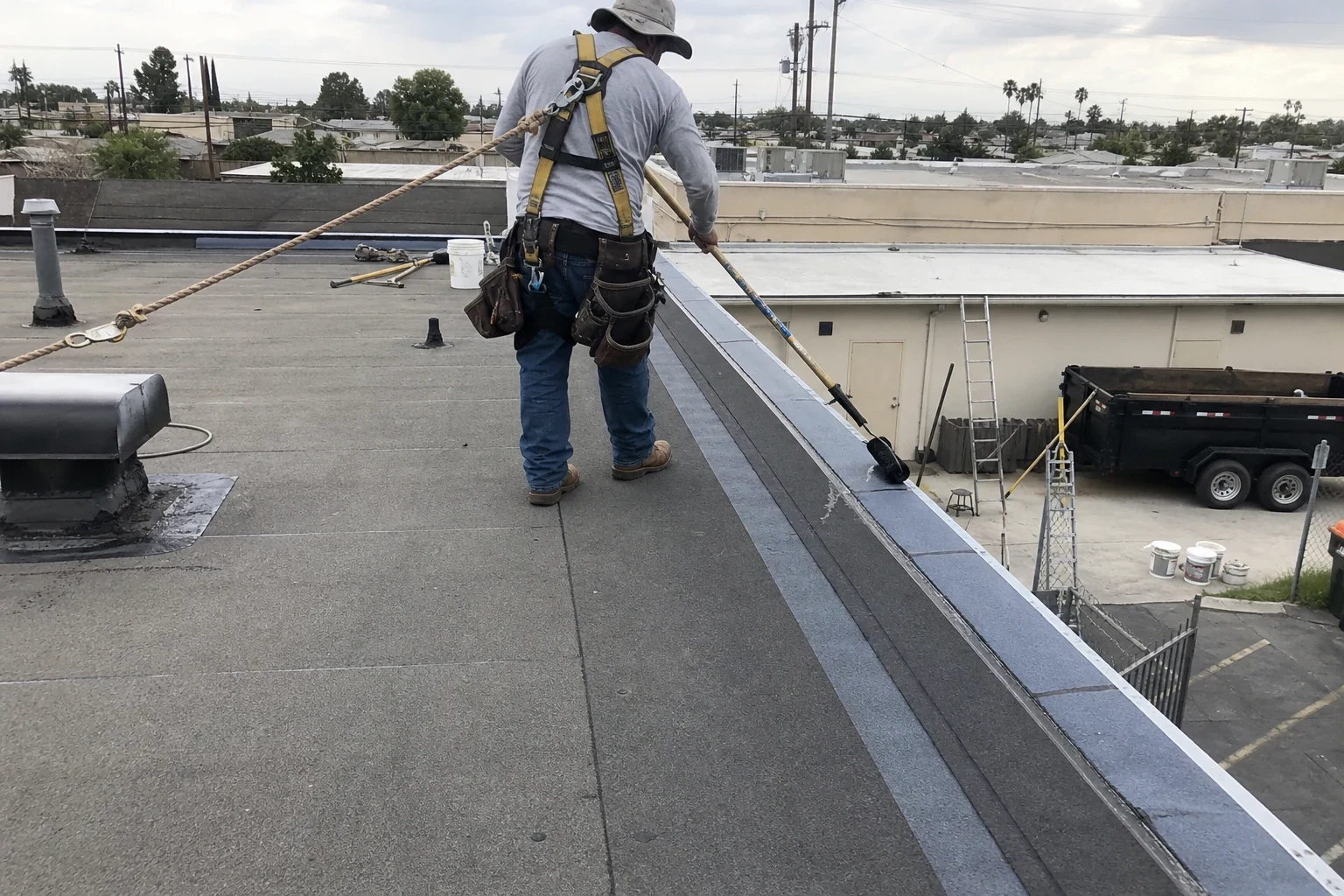
Most commercial buildings we work on have flat or low-slope roofs: TPO or PVC single-ply membrane, modified bitumen, or an older built-up roof with a cap sheet or gravel surface. Water does not run off these roofs quickly. A split seam, a cracked flashing at an HVAC curb or a clogged scupper lets water sit, and standing water always finds the weak spot.
We serve building owners and property managers in Artesia, Cerritos, Norwalk and the surrounding area. The work happens above people trying to run a business, so we plan it that way. Before we start you know how many days the job should take, which areas get torn off on which day, and when the crew arrives each morning. If rain or a late material delivery pushes the dates, you hear it from us first.
What our commercial roofing work includes
Membrane and seam repairs
For TPO and PVC, we clean the surface and heat-weld new patches and seams with hot air, fusing the plastic rather than counting on glue. For modified bitumen, we torch down or cold-apply fresh plies over the damage.
Flashing at curbs, parapets and openings
Most leaks on commercial roofs begin where something passes through: HVAC curbs, plumbing vents, conduit and skylights. We rebuild base and counter flashing and refill pitch pockets that have dried out and separated.
Fixing drainage and ponding
Drains and scuppers get cleared and repaired, and we add tapered insulation or crickets behind curbs and along parapets so water heads to the outlets instead of sitting for days.
Restoration coatings
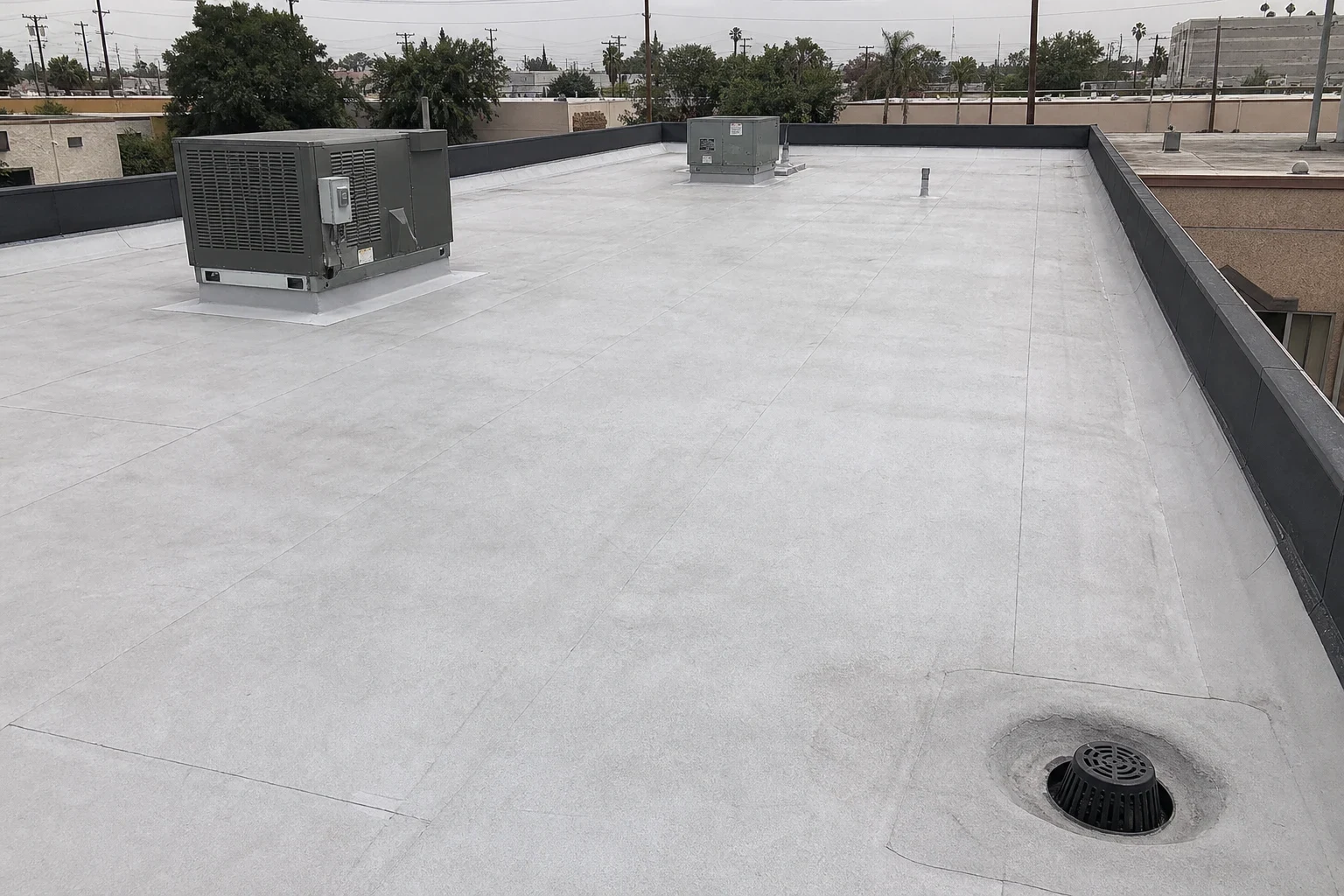
If the membrane is still solid and the insulation is dry, a silicone or acrylic coating can add years and reflect heat. When a roof is too worn for coating to be worth it, we say so.
Complete tear-off and new roof
We strip the old system to the deck, swap out wet insulation, lay cover board and a new membrane and flash every edge and opening. California's Title 24 energy code sets cool-roof requirements for many low-slope reroofs, and that shapes the material we pick.
When a commercial roof needs a look
Puddles still there 48 hours after rain
Water that sits longer than two days points to a sagging deck, flattened insulation or a clogged drain. The weight and steady moisture make seams fail faster.
Ceiling tile stains under rooftop equipment
Drips or brown rings beneath an HVAC unit usually come from failed curb flashing or the unit's condensate line, not the main roof surface.
Blistering, cracking or alligatoring
On modified bitumen and built-up roofs, sun and heat dry the asphalt until the surface cracks in a reptile-skin pattern. Blisters rise where trapped moisture expands between plies.
Membrane pulling off the parapet
Aging single-ply roofs shrink and can stretch across the corner where roof meets wall. That tight section rips easily and lets water in behind the flashing.
Spongy spots when you walk
A roof that gives underfoot likely has waterlogged insulation beneath it. Wet insulation loses its R-value and can rot the deck if it stays.
How a commercial roof job runs
- 1
Free inspection with photos
We walk the whole roof, check drains, flashing and seams, and photograph what we find. When needed, we take a small core sample to count layers and check for wet insulation, then patch the cut before we leave.
- 2
Written estimate and a realistic timeline
You get a free written estimate with line items, along with the number of working days, the crew size, the material delivery date and permit timing. We tell you which dates depend on weather.
- 3
Prep and notice
We confirm the arrival window, the day a material lift or crane is needed, where the dumpster goes and which entrances we will protect. You can share that plan with tenants or staff well ahead of time.
- 4
Work in sections, dried in daily
We only tear off what we can make watertight the same day, so the building is never left open overnight. You get an update at the end of each day on what is finished and what comes next.
- 5
Final walk and cleanup
We flood-test drains where practical, photograph the finished details, haul away debris and run a magnet across the parking lot and walkways for stray fasteners.
What decides the cost of a commercial roof job
On commercial roofs, the price comes down to what sits under the surface and how hard it is to reach. A thorough inspection and a core sample let us price the real work rather than estimate blind. Financing is available through Service Finance Company, subject to credit approval.
- Roof size and layers to remove
- Larger roofs cost more in total, and every old layer adds removal and disposal. Code limits how many roofs one deck can carry, so some buildings call for a full tear-off.
- The roofing system
- TPO, PVC, modified bitumen and coatings differ in material cost, how they go on and how they hold up to foot traffic or grease exhaust.
- Deck and insulation condition
- Soaked insulation has to be cut out and replaced, and rusted metal or rotted wood deck must be repaired before any new membrane is installed.
- Rooftop access and equipment
- Lift or crane days, tight sites and HVAC units that must be raised or disconnected for correct flashing all take extra time and planning.
- Permits and work hours
- Every reroof requires a permit and an inspection. Scheduling around business hours or limiting noisy tear-off to set days can add working days.
Questions about commercial roofs
Something not covered here? (562) 568-5069
Can we stay open while you work?
Usually, yes. We stage the job so tear-off above occupied space happens on the days and hours you approve, and entrances and walkways stay protected. Tear-off is noisy, so you'll know ahead of time which days will be loudest.
How many days does a commercial reroof take?
That depends on roof size, how many layers there are and how much wet insulation we find. A small one-story building might take a few work days, and bigger roofs take more. The written estimate gives the expected day count, and we call if weather or deliveries change it.
Is a coating enough, or do I need a new roof?
Coating makes sense when the membrane is whole and the insulation is dry. If core samples find soaked insulation or seams are failing across the roof, a coating just hides the trouble. You get the photos and core results so the reasoning is plain.
Will you take care of the permit?
Yes. We pull the reroof permit, set up the inspection and build the roof to the energy code rules that apply. The inspection date is part of your project calendar with everything else.
Do you help with insurance claims on commercial property?
We work directly with your insurance claim. We record the damage in photos and measurements and show the adjuster what we found. Coverage is decided by the adjuster and your carrier, but you'll have a clear record in hand.
Put your roof work on a calendar you can trust
Tell us about the building and we will set up a free inspection, then follow with a written estimate and a timeline that shows how many days the job should take.