ServicesTile Roofing
Tile Roofing for Artesia Homes
Clay and concrete tile can last for generations, but the underlayment under it gives out far earlier. We fix broken tile, relay tired underlayment and put on new tile roofs, with a start date and arrival window you can plan your week around.
Most tile roof leaks start under the tile
Tile is a water-shedding layer, not a waterproof one. Wind-driven rain gets past the laps between tiles, and the felt or synthetic underlayment below is what keeps it out of the roof deck. Years of summer heat dry that felt until it cracks at the battens and fasteners, so a roof with perfect-looking tile can still leak every winter.
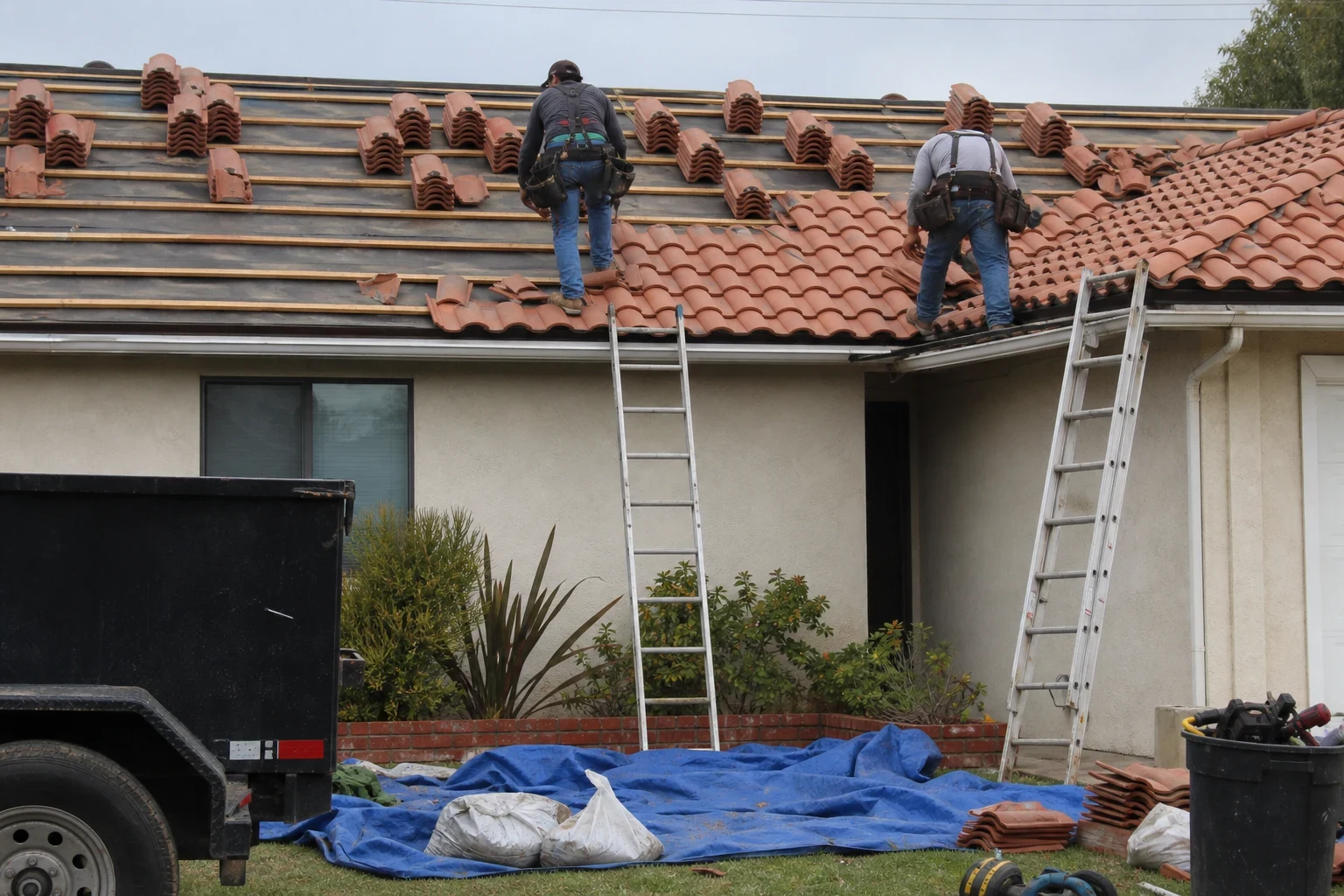
That is why we look past the surface. Sometimes the right answer is swapping a few cracked tiles and resetting a ridge. Other times the tile is sound and only the underlayment has failed, which calls for a lift and relay: we remove the tile, replace the underlayment and flashing, then reset your original tile. When the tile itself is spent or no longer made, a new roof makes more sense. We explain which one applies and why before we price anything.
What our tile work includes
- Replacing broken and slipped tile
- Cracked, chipped and slipped tiles get replaced with the same profile, be it two-piece mission, S-tile or flat concrete. Color and shape matter, so we find the tile before booking your date.
- Lifting and relaying tile
- Your tile is numbered and stacked, the old underlayment comes off, and new underlayment, battens where needed and new flashing go down. Then your own tile is put back, so the house keeps its look and the worn layer is replaced.
- Valley metal and flashing
- Tile roofs leak most at headwalls, chimneys, skylights and valleys. We swap out rusty or too-small valley metal and redo step and counter flashing so water runs off the roof, not beneath it.
- Ridges, hips and eaves
- Cracked mortar ridges are rebuilt or changed over to a mechanically fastened ridge system, and we add bird stops and eave closures to keep nests and debris out of the bottom row.
- Installing a new tile roof
- A full replacement means tearing off to the deck, fixing soft sheathing and putting down new underlayment and clay or concrete tile. When a house is going from shingles to tile, we first confirm the framing can handle the added weight.
Signs your tile roof needs attention
Ceiling stains after the first big rain
A stain that shows up in winter but not in summer usually points to underlayment that has cracked beneath the tile. The tile above it often looks fine.
Cracked or slipped tiles
Foot traffic from dish installers or painters breaks tile more than weather does. A slipped tile exposes the underlayment to sun, which speeds up its failure.
Crumbling ridge mortar
Mortar at the hips and ridge shrinks and cracks over time. Once it lets go, ridge caps can loosen and rain runs straight into the ridge line.
Rust in the valleys
Rusted or pinholed valley metal is a common source of leaks on older tile roofs. It is hidden under tile edges, so you may only see it from a ladder.
Birds or debris at the eaves
Missing bird stops let birds nest in the first row of tile, and the nesting material holds water against the underlayment.
An older roof with original underlayment
If your tile has never been lifted, the felt beneath it may be near the end of its life. A free inspection tells you how much service it has left.
What sets the price of a tile roof job
Tile work swings more in price than shingle work, since so much rides on what's beneath the tile and whether your tile can go back on. The written estimate breaks out each piece of the job so you can see where your money goes. Financing is available through Service Finance Company, subject to credit approval.
Fix, relay or new roof
Replacing a few tiles is a small job. A lift and relay takes more labor but spares you the cost of new tile, while a full replacement adds new tile and deck work.
Which tile, and can it be found
Clay usually runs higher than concrete, and profiles no longer made may call for salvaged tile or a careful mix of near matches.
Underlayment and flashing picked
Two-ply or high-temperature synthetic underlayment costs more than one layer of felt but lasts longer beneath tile. New valley metal and chimney flashing also raise the total.
Slope, size and getting to it
Steep pitches, second stories and narrow side yards slow staging and tear-off, which adds labor.
State of the deck
Sheathing that's soft or water-damaged must be replaced before new underlayment is laid. You see photos of any rot before we replace it.
How a tile roofing job runs
- 1
Inspection and written estimate
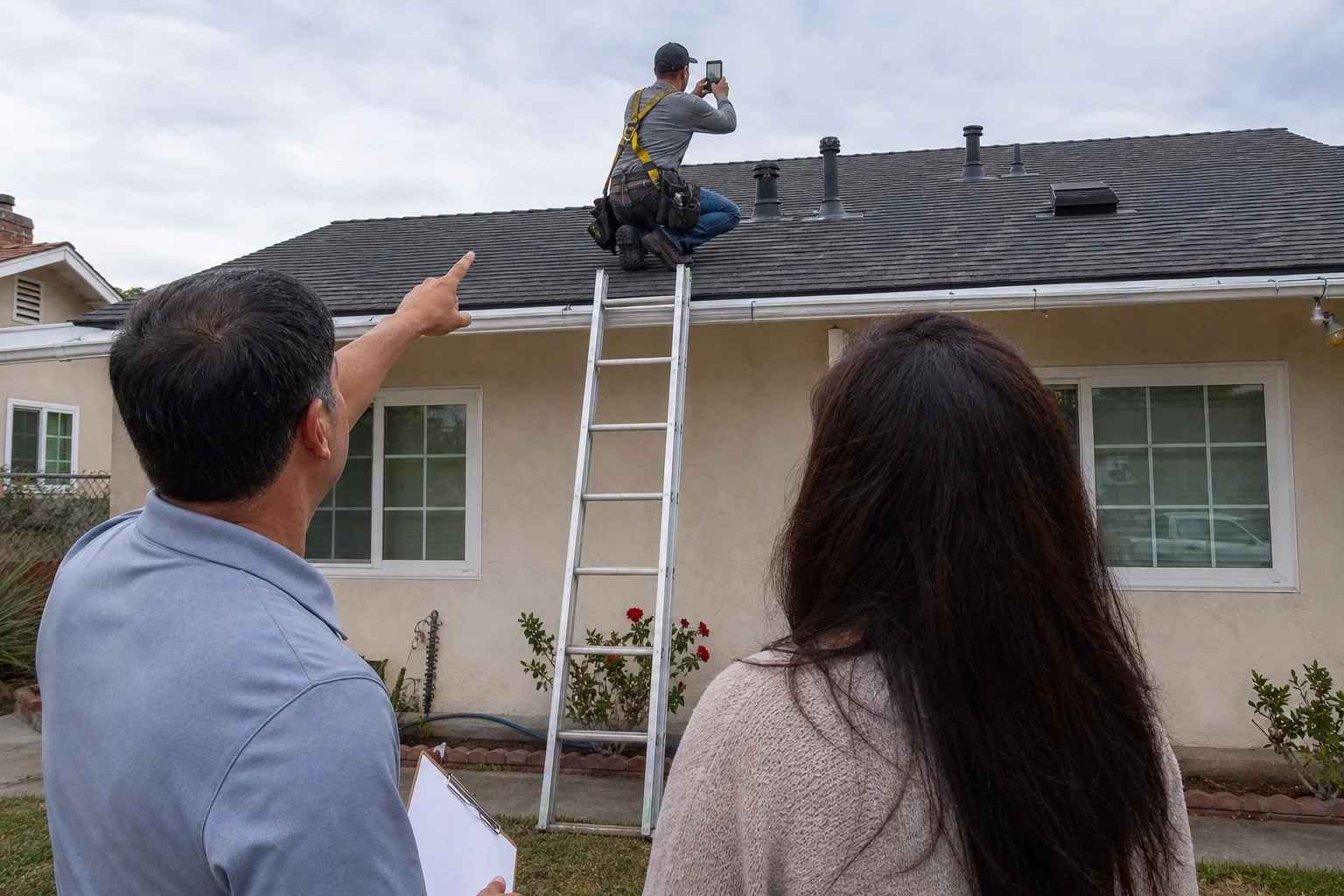
We walk the roof carefully, stepping on the tile heads where it is strongest, lift tiles at suspect areas and photograph what we find. You get a free written estimate that separates tile, underlayment, flashing and deck work.
- 2
Materials first, then a date
We confirm tile, underlayment and flashing are in hand or on a firm delivery before we set your start date. If a matching tile has a long lead time, we tell you that on the estimate, not the morning of the job.
- 3
Arrival window and daily updates
You get an arrival window for each work day. If rain or a delivery delay changes the plan, we call you as soon as we know and give you the new date.
- 4
Removal, relay and reset
Tile is staged on the roof or in a protected spot on the ground, the underlayment and flashing go down, and tile is reset in its original pattern. A typical lift and relay on a single-family home takes several working days, depending on size and pitch.
- 5
Cleanup and walkthrough
We haul off old underlayment and broken tile, sweep for nails and walk the finished roof with you or send photos of every area we worked on.
Questions about tile roofs
Can my current tile go back on?
Usually. Clay and concrete tile tend to come through a careful lift, and we plan on a small share breaking during removal. We line up matching replacements before the job begins so the roof looks even when it's done.
How long is my roof left open?
We strip only the underlayment we can cover that same day, so the house is never open overnight. We keep an eye on the forecast, shift the date if rain is due and phone you when we do.
Can people walk on a tile roof safely?
Tile breaks when stepped on in the wrong place. Our crew puts weight on the lower part of each tile, where the tile below supports it. If a solar or satellite installer needs to get up there, have them call us first, or let us check the roof afterward.
Does insurance cover tile repairs?
That depends on what caused the damage and on your policy. Sudden damage, such as a falling branch cracking tile, is often covered, and worn-out underlayment usually isn't. We work directly with your insurance claim and provide photos and a line-item estimate, while your adjuster decides on coverage.
Find out what is happening under your tile
We will lift tile where it matters, photograph the underlayment and flashing, and give you a written estimate with a realistic start date. If the tile only needs a few replacements, we will say so.