ServicesUrgent Roof Repair
Urgent Roof Repair in Artesia
When a storm lifts shingles or water starts coming through a ceiling, we secure the damaged area, stop more water from getting in, and then plan the permanent repair. You get an honest arrival window on the phone and a call from us if that window moves.
Securing the Roof First, Repairing It Right Second
Urgent roof work has two jobs. The first is to keep water out of your home: a properly fastened tarp, a sealed flashing joint or a replaced broken tile. The second is the repair that lasts, which often needs materials ordered, dry weather and a full look at the decking underneath.
We keep those two jobs separate on purpose. A rushed permanent repair on wet plywood or over soaked felt traps moisture and fails early. So we stabilize what needs it now, tell you exactly what we found, and give you a realistic date for the finished repair.
Timing is where most people get let down after a storm. When you call, we tell you when a crew can actually reach you, not a hopeful guess. If weather or an earlier job pushes that back, you hear it from us before the window opens.
What the Visit Covers
- Tarping that actually holds
- We run tarps over the ridge and fasten them to wood battens instead of nailing through the tarp alone. That keeps wind from getting under the edge and tearing it loose in the next gust.
- Temporary sealing at flashing
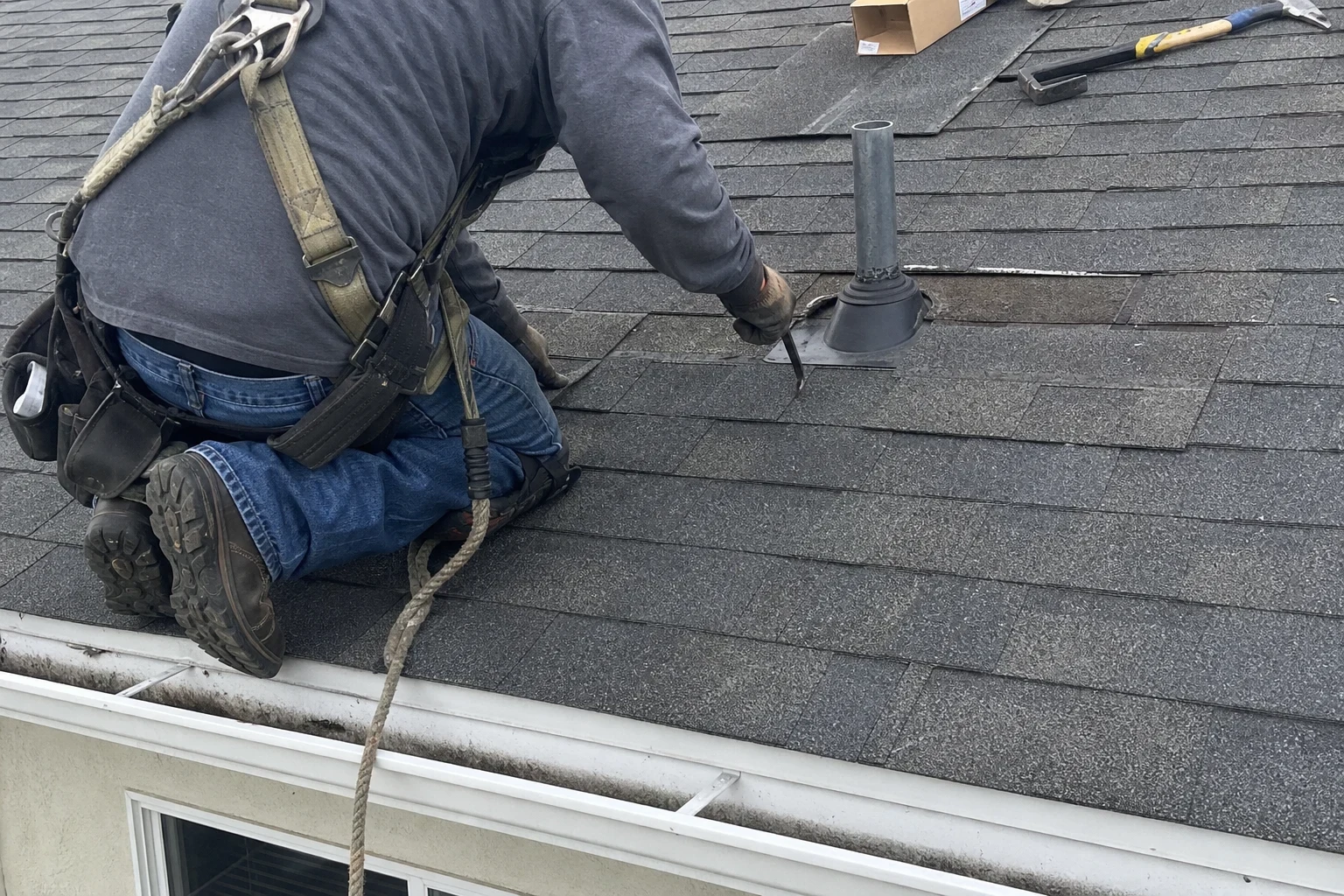
- Lifted step flashing, a cracked pipe boot or a separated chimney counterflashing gets sealed with roofing cement or a temporary boot so water stops tracking along the joint.
- Broken tile and missing shingles
- On concrete or clay tile we swap cracked pieces and check the underlayment beneath them. On composition roofs we replace blown-off shingles and reseal neighboring tabs whose adhesive strip let go.
- Interior check from the attic
- Where we can reach it, we look at the underside of the decking for wet spots and staining. That tells us how far the water traveled, which is often well beyond the drip in your ceiling.
- Photos and a written plan
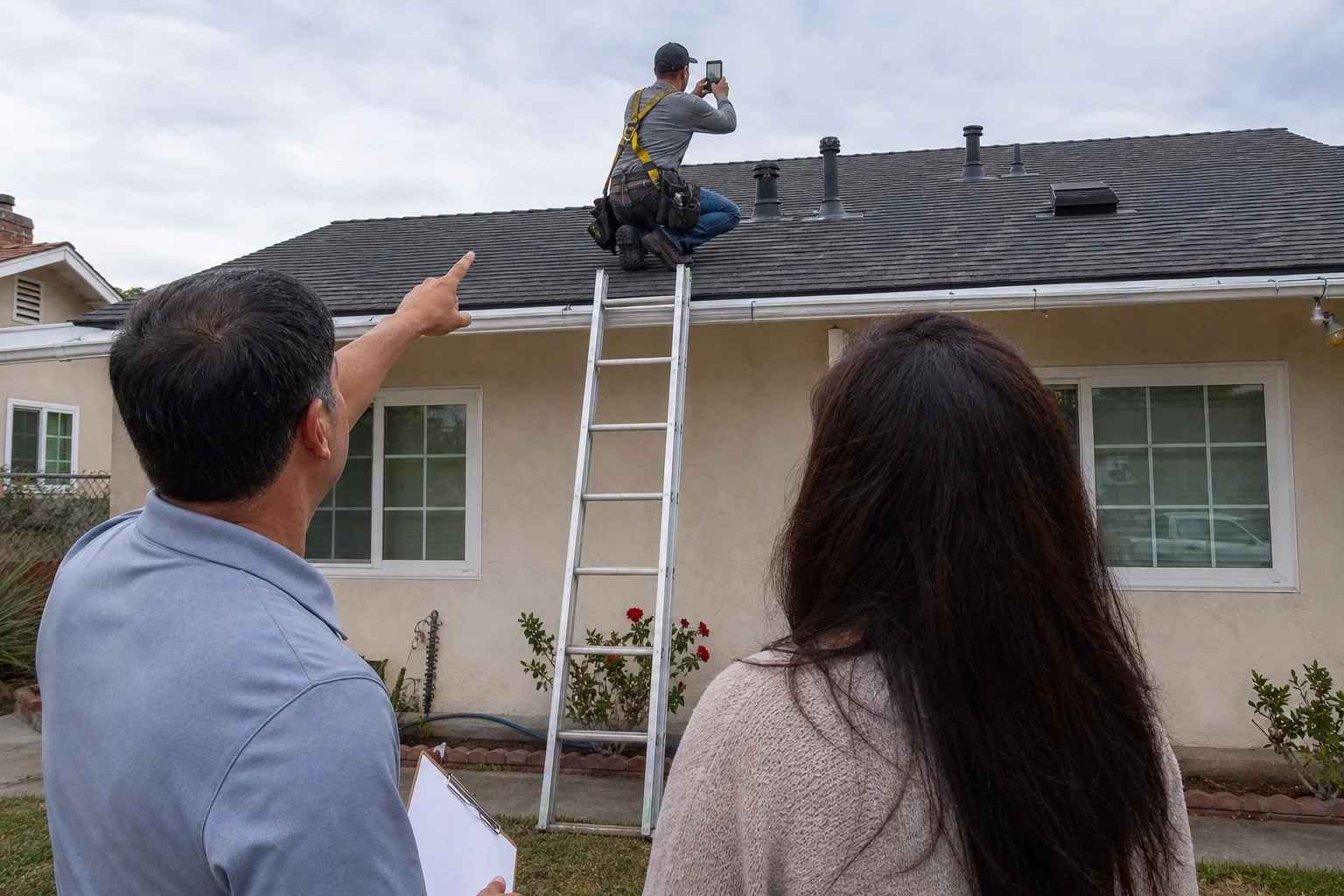
- You get photos of the damage and a free written estimate for the permanent repair. If you file with your insurance, we work directly with your claim and share the same records with the adjuster.
Signs Your Roof Needs Attention Right Away
Active dripping inside
Water through a light fixture, a ceiling stain that grows during rain, or a bulge in drywall means water is already past the underlayment. Move belongings, and keep clear of wet ceilings around electrical fixtures.
Shingles or tile in the yard
Strong winter winds can peel shingles or slide tiles off their battens. Each missing piece leaves felt or bare decking exposed to the next storm.
A tree limb on the roof
Even a limb that looks small can crack tile, puncture decking or shift a rafter. Do not climb up to move it; the weight may be the only thing holding a damaged section in place.
Flashing pulled away
Metal bent back at a chimney, wall or skylight opens a direct path for water into the framing.
Sagging or soft spots
A dip in the roofline after heavy rain can mean saturated decking. That needs a look before anyone walks on it.
What Moves the Cost
Urgent work is priced on what the roof actually needs, and you hear the temporary and permanent costs separately. The free inspection and written estimate come before any repair beyond securing the roof. Financing is available through Service Finance Company, subject to credit approval.
Roof material
Concrete and clay tile take longer to work around than composition shingles, and matching a discontinued tile profile can mean salvaging pieces from a less visible slope.
Size and pitch of the damaged area
A small tarp over one slope is quick. A steep roof or a damaged ridge needs more rigging and more labor.
Condition of the decking
If plywood or skip sheathing is soaked or delaminated, it has to be cut out and replaced before new underlayment goes down.
Insurance involvement
When a claim is open, documentation takes more time on site. That record helps the adjuster see the damage as it was.
How an Urgent Repair Runs
- 1
The phone call
We ask where the water is showing, what the roof is made of and whether anyone is at risk. Then we give you an arrival window we can keep. Service is available in English and Spanish.
- 2
Arrival and safety check
The crew checks ladder footing, roof surface condition and any wiring near the damage before going up. Wet tile and wet shingles are slick, so we set our pace by safety.
- 3
Stabilize the damage
We tarp, seal or replace pieces as needed to stop water from getting in. Before we leave, we walk you through what was done and what is still temporary.
- 4
Schedule the permanent repair
You get a written estimate and a target date tied to dry weather and material delivery. If either changes, we call you with the new date and the reason.
Questions About Urgent Roof Repair
How soon can you get here?
It depends on the weather and how many roofs were hit in the same storm. We give you a real arrival window on the call instead of a promise we cannot keep. If that window changes, we call before it opens.
Is a tarp enough until the full repair?
A tarp fastened with battens over the ridge will usually hold through several rain events. It is not meant to last for months, because UV breaks the material down and wind works at the edges. We schedule the permanent repair as soon as conditions allow.
Should I call my insurance company first?
You can call either one first. Most policies expect you to take reasonable steps to prevent further damage, so securing the roof promptly usually helps. We work directly with your claim and provide photos and a written scope, but the adjuster makes the coverage decision.
Will you replace my whole roof?
Most urgent calls end in a repair, not a new roof. If the decking is widely rotted or the underlayment has failed across the roof, we will show you the photos and explain why repair would not hold. Roof replacement is a separate conversation with its own estimate.
Can you work on my tile roof without breaking more tiles?
Our crew keeps its weight near the bottom edge of each tile, over the overlap, where the piece is supported from below. On fragile sections we lay down foam pads to spread the load. Some older clay tile cracks even with careful footing, so we carry spare pieces and point out any that break.
Get the Damage Looked At
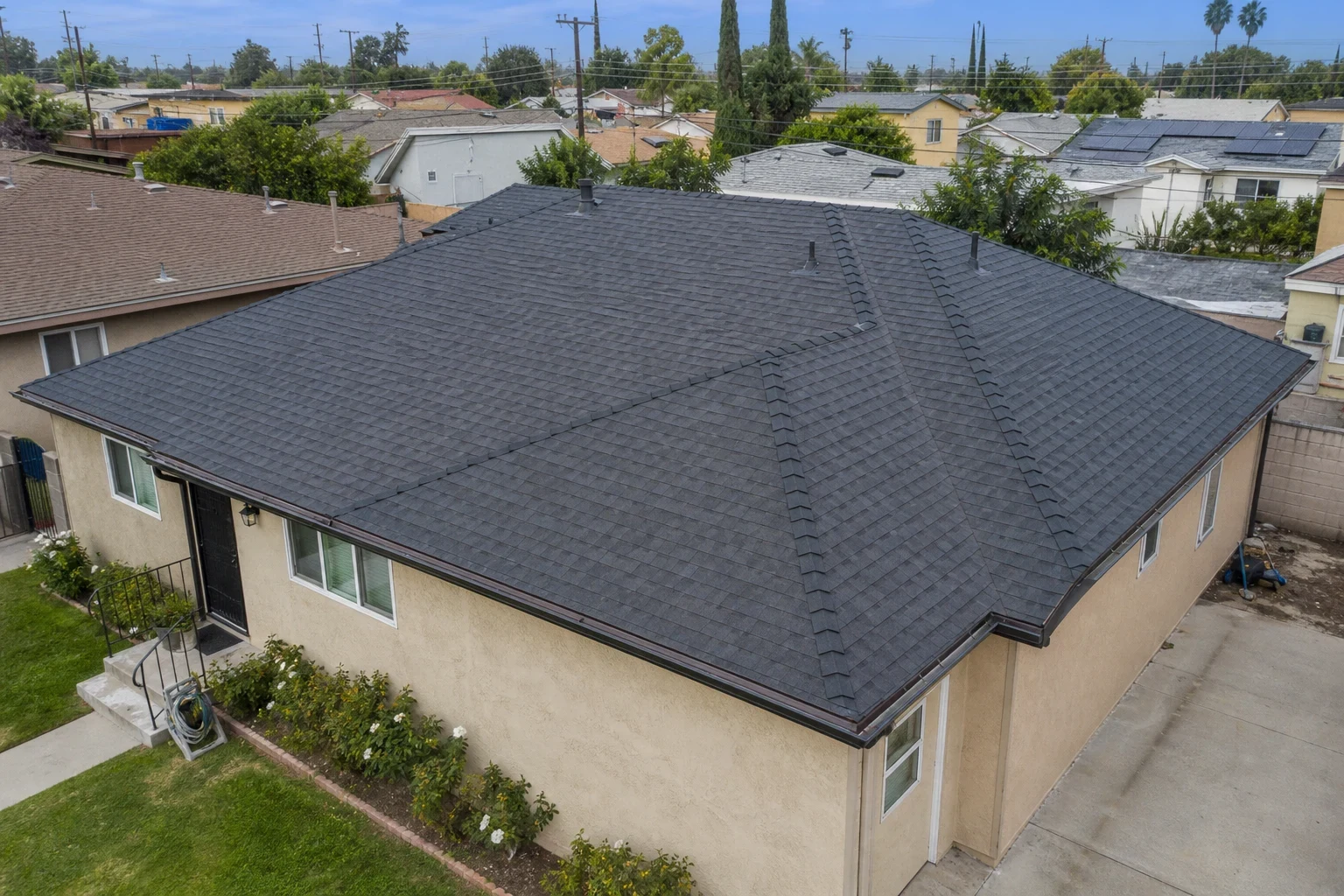
Tell us what you are seeing and where. We will give you a realistic arrival window, secure the roof, and leave you with a written plan for the lasting repair.