ServicesRoof Inspections
Roof Inspections in Artesia
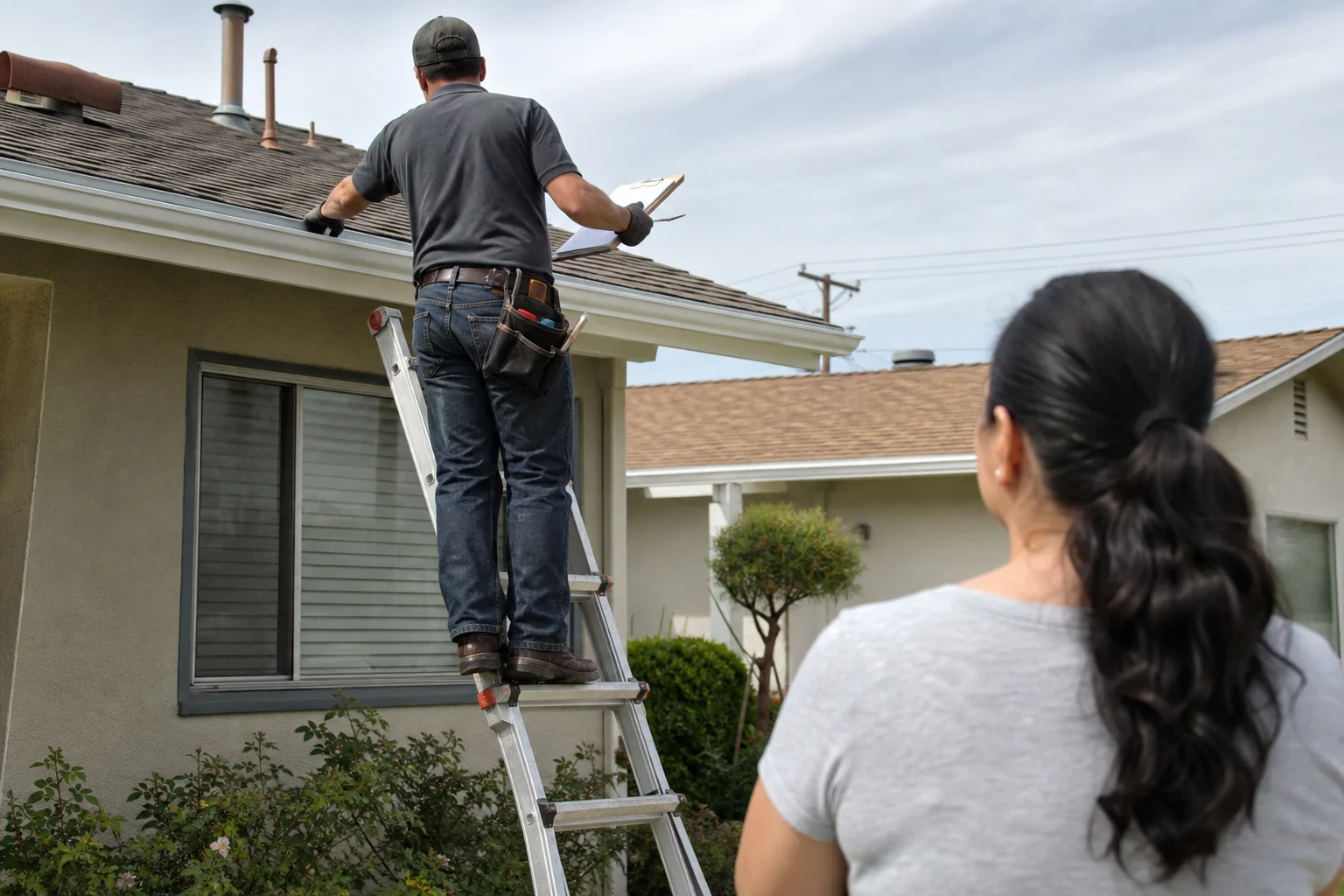
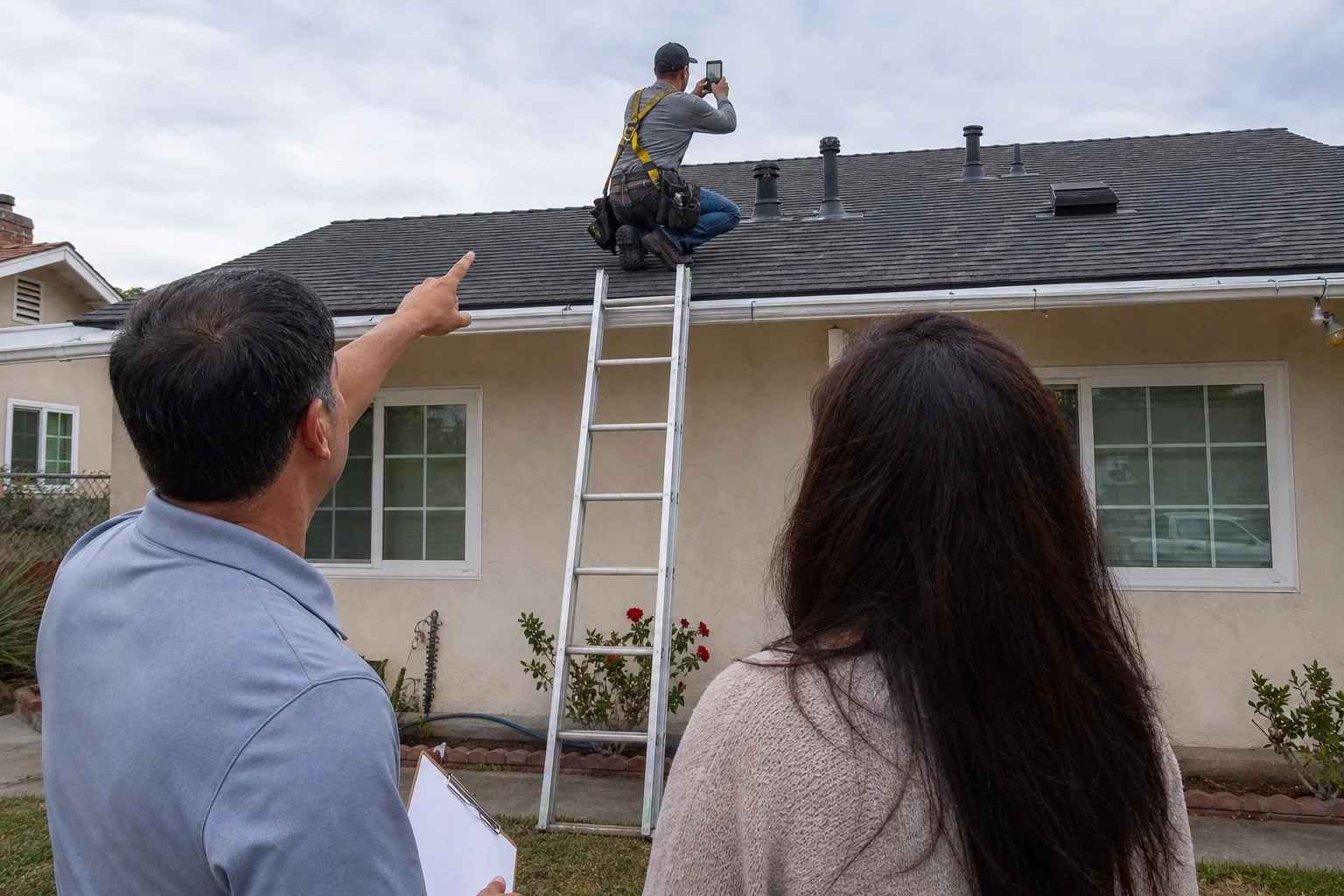
We walk your roof, check the attic side when we can reach it and photograph every problem we find. You get a set arrival window, a clear report and an honest answer on whether anything needs work now, later or not at all.
What a Roof Inspection Tells You
Most roof trouble starts small and out of sight: a lifted shingle tab, a cracked tile over a valley, a pipe boot that has split in the sun. An inspection finds those points before water reaches the decking or the drywall. Book one when a home sale or purchase is coming up, after a strong wind, once a roof is 15 years old or more, or when a stain shows up and you cannot tell where it starts.
Many homes in the area have been reroofed once or twice over the decades, often with layers and patches from different crews. We read the roof as a system, so you learn what is original, what was added and how each part is holding up.
When we set your visit, we give you a realistic arrival window and stick to it. If a job before yours runs long or rain moves the day, we call you before the window opens, not after.
What Every Inspection Covers
- Shingles or tile
- On asphalt shingle roofs we check for lost granules, curled edges, split tabs and seal strips that let go. On clay or concrete tile we look for cracks, slipped pieces and chipped corners that leave the underlayment exposed.
- Flashing and roof openings
- Most leaks start at wall step flashing, chimney counterflashing, skylight curbs and pipe boots. We look at each for rust, raised edges and sealant that has dried out.
- Valleys, ridge and ventilation
- Valleys move more water than any other part of the roof, so we check their lining and any debris closely. We also look at ridge caps and attic vents, and whether airflow is enough to keep attic heat from baking the shingles.
- Attic side and decking
- When the attic is reachable, we check the underside of the decking for water stains, pinpoints of daylight, soft areas and mold. A leak hidden beneath shingles that look fine is often obvious from inside.
- Gutters and water flow
- We make sure gutters are sloped, secured and clear, and that downspouts carry water away from the fascia and foundation. Water standing at the eaves rots the fascia and the wood behind the drip edge.
- Report with photos
- We photograph each issue we note, and the summary places every finding in one of three groups: fix now, watch, or fine as it is. When work is needed, a free written estimate comes next.
When It's Time to Have Your Roof Checked
Marks on a ceiling or wall
A brown ring tells you water has been getting to the drywall for a while. Because water travels along rafters and decking before it drips, the opening may be well above the stain, so we trace it from both the roof and the attic.
Grit collecting in the gutters
Aging shingles lose their mineral coating. A heavy pile of granules at the downspouts means the asphalt below is open to UV and breaking down faster.
Broken or slipped tiles
The tile can last for decades, but the underlayment under it won't. A few cracked pieces can send water onto felt that may already be close to worn out.
Following high winds or heavy rain
Santa Ana gusts can raise shingle tabs and break their seal without pulling them loose. From the street they look normal, then leak in the next storm.
A sale, purchase or insurance review
A photo report makes a sale go smoother and gives you a starting record of how your roof looks today.
What Affects the Inspection and Any Work That Follows
There is no charge for the inspection. The cost of any repair or replacement comes from what we find up there, and we walk you through those reasons before you make any decision. Financing is available through Service Finance Company, subject to credit approval.
Roofing material
Tile repairs need more labor, since each piece is lifted and set back by hand. Shingle repairs tend to go faster but rely on finding a close color match.
State of the decking
Rotted or soft plywood must be replaced before new roofing goes on. The full extent shows only once the covering is opened, and if it changes the scope, we tell you right away.
Height, pitch and access
A second story or steep slope means harnesses, roof jacks and longer hours on site. A low-slope area over a patio or addition may need a different material entirely.
Insurance claims
When wind or another covered event caused the damage, we work directly with your insurance claim and supply photos and measurements. The coverage call is your adjuster's.
What Happens on Inspection Day
- 1
Booking over the phone
During the call we write down your roofing material, its approximate age and what prompted you to call. Then we suggest a day and an arrival window that suits you.
- 2
A call as we head your way
We let you know when we're on the road. If the timing changes, we tell you early so you aren't left waiting through the window.
- 3
Up on the roof and into the attic
Most inspections run about an hour, based on size, pitch and access. We walk shingle roofs, step with care on tile so it doesn't crack, and check the attic if there's a way in.
- 4
Reviewing what we found
Back on the ground, we go over each photo with you and explain in plain words what it shows. You learn whether a repair will last or whether the roof is nearing replacement.
- 5
An estimate when work is needed
If something needs fixing, you receive a free written estimate with a realistic start date, and you're under no obligation to book.
Roof Inspection Questions
Is the roof inspection really free?
Yes. We inspect your roof, show you photos and explain what we found at no charge. If you want a price for any work, the written estimate is free too.
Do I need to be home?
We prefer that you are, at least at the end, so we can walk you through the photos. If we need attic access, someone has to let us in. If you cannot be there, we can go over the findings by phone.
How soon can you come out?
That depends on the week and the weather, so we give you an honest date when you call rather than a promise we might miss. Once your window is set, we keep it or call ahead if something changes.
Will walking on my tile roof break it?
Tile can crack under careless footing. We step on the lower third of each tile where it is supported by the one below, and we point out any piece that was already cracked before we got there.
What if the inspection finds nothing wrong?
Then we tell you that. Plenty of roofs just need a gutter cleanout or a resealed pipe boot, and some need nothing at all. You still keep the photos as a record of your roof's condition.
Know Where Your Roof Stands
We serve Artesia and nearby towns including Cerritos, Norwalk, Lakewood and Bellflower. Tell us when works for you, and we will set an arrival window you can plan the day around.