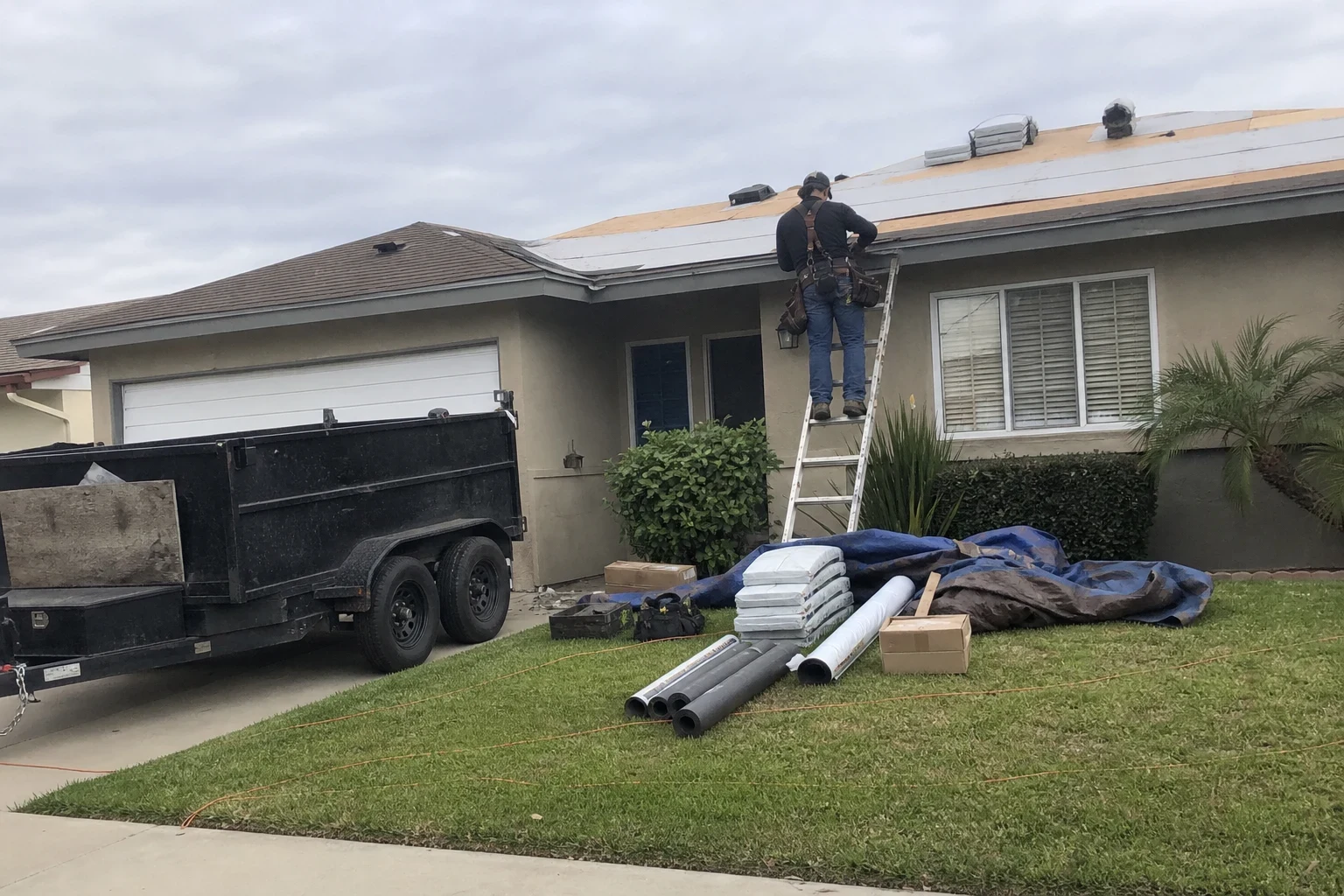
ServicesFlat Roofing
Flat Roofing in Artesia, Planned Around Dry Days and Your Week
We repair and replace low-slope roofs on houses, additions and patio covers using modified bitumen, TPO and reflective coatings. You get a clear diagnosis, a written scope, a realistic start date and an arrival window, plus a heads-up the moment anything shifts.
Flat Roofs: What They Are and When You Need Work
No flat roof is actually level. To carry water to a drain, scupper or gutter edge, it needs a minimum of a quarter inch of drop for every foot. Without that pitch, water collects, the membrane softens and the seams begin to separate. Nearly every flat roof problem we find comes down to poor drainage, worn seams or flashing at walls and penetrations.
Low-slope sections are common on homes in Artesia and neighboring towns such as Cerritos and Bellflower: mid-century ranch roofs, back additions, carports and porch covers joined to a pitched roof. A few just need a seam repaired. Others need a coating over a membrane that is still sound. And some need every old layer stripped off to the deck.
We explain which of those fits your roof and the reason, then give you dates that hold up.
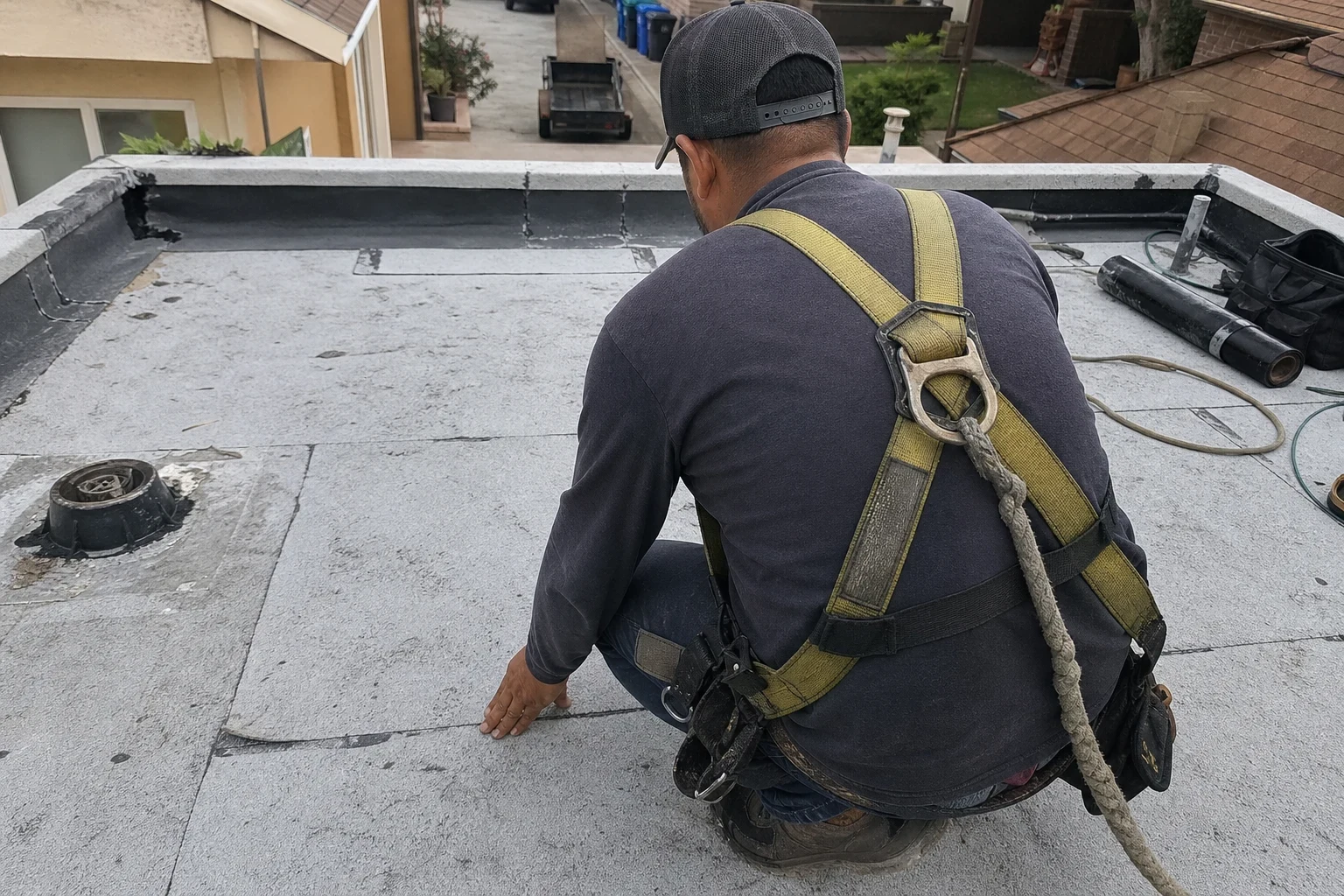
What the Work Includes
- 01
Membrane repair
We cut out blistered or split sections of cap sheet or single-ply and patch with matching material, lapped and sealed past the damage. A dab of mastic over a crack is not a repair, so we don't sell it as one.
- 02
Full tear-off and replacement
We remove old built-up, gravel or rolled roofing down to the sheathing, replace soft or delaminated plywood, then install a new base and cap system. Choosing between modified bitumen and TPO depends on foot traffic, adjoining roofs and budget, and we explain the tradeoffs before you choose.
- 03
Drainage correction
Tapered insulation, added crickets behind walls and enlarged or relocated scuppers move standing water off the roof. Fixing slope is what stops the cycle of repeat patches.
- 04
Flashing and penetrations
We rebuild flashing at parapets, wall transitions, vent stacks and HVAC curbs, which is where most low-slope leaks begin.
- 05
Reflective coatings
On a membrane that is still firmly adhered and dry underneath, an elastomeric or silicone coating adds years and cuts heat gain from the sun. We test for trapped moisture first, because coating over wet layers seals the problem in.
Questions about Flat Roofing?
Call(562) 568-5069When Your Flat Roof Needs a Look
Puddles that last two days after rain
Water that stays beyond 48 hours wears down asphalt-based membranes and puts constant weight on the framing. The cause is usually sagging joists, a blocked drain or a roof built with too little slope.
Bubbles and blisters
Trapped air or moisture between plies swells in the heat and forms raised pockets. When those split, water gets straight into the layers.
Cracked surface or bare patches
A scaly, alligator-pattern surface or spots where granules have rinsed away show that UV has eaten through the protective layer.
Lifting seams at edges and walls
Laps that have opened at the drip edge or along a stucco wall let wind-blown rain slip beneath the membrane.
Ceiling stains underneath
Water on a flat roof often runs across the deck before it drips, so the stain can be several feet away from the real opening. We follow it to the source instead of guessing.
The Steps of a Flat Roof Job
- 1
Roof walk and moisture testing
We go over the roof, press on soft spots, look at drains and flashing and photograph each problem. You hear what we found in plain language, plus whether we recommend repair or replacement.
- 2
A written scope and an honest start date
The free written estimate covers materials, the layers coming off, a deck allowance and any drainage changes. The start date comes from our real schedule and the forecast, not the soonest day we could say.
- 3
Arrival window and updates on the day
We confirm a morning arrival window the day before. If rain rolls in or a delivery runs late, we reach you before the crew would have arrived and give you a new date.
- 4
Tear-off and install, sealed section by section
Only what we can close that day gets opened, so the deck never sits exposed overnight. A single-story flat roof usually takes one to three working days, based on its size and any deck repairs.
- 5
Drain test and cleanup
Where we can, we flood-test the drains and scuppers, then clear debris and sweep the yard and driveway with a magnet for loose fasteners.
What Drives the Cost of a Flat Roof
Three things set the price of a flat roof: how much comes off, what condition the deck is in and what gets installed. Your estimate shows each one on a separate line instead of rolling them into a single figure. Financing is available through Service Finance Company, subject to credit approval.
- Layers already on the roof
- Removing two or three old layers of built-up or gravel roofing takes more labor and hauling than stripping one sheet.
- Condition of the deck
- Plywood that has sat under ponding water tends to delaminate. Replacing it raises the cost, and you see a photo of every damaged section before we swap it out.
- Membrane and insulation selected
- Modified bitumen, TPO and coatings each carry different material and labor costs. Tapered insulation adds material for drainage, but it puts an end to repeat ponding repairs.
- Openings and tie-ins
- Each vent, skylight, AC curb and wall connection gets its own flashing, so a crowded roof runs more per square foot than a clear one.
Common Questions About Flat Roofs
Can ponding be fixed without a whole new roof?
In some cases. When the low spot is confined to one area, we can build up that spot with tapered insulation or a cricket and reroof only that section. When the framing has sagged across the whole roof, a partial repair won't last, and we say so before any work.
Will a coating do, or does the roof need replacing?
Coatings only make sense when the membrane is still firmly bonded and the layers below are dry. We probe and test for moisture before suggesting one. A coating over wet insulation locks the water in and cuts the roof's life short.
What if rain shows up while you're working?
We never open more roof than we can seal before the day ends, so a surprise shower can't get to the deck. When rain is in the forecast for a scheduled work day, we call in advance to move it and tell you the next realistic date.
Is a permit needed to replace a flat roof?
A full replacement typically needs a city building permit plus an inspection. On a low-slope reroof, California's energy code may also call for a cool-rated surface, which we factor into the material we choose. We take care of the permit and book the inspection.
Does insurance cover a flat roof?
That hinges on whether a covered event caused the damage or it came from age and wear. We work directly with your insurance claim, recording the damage in photos and measurements, but the coverage decision belongs to your adjuster.
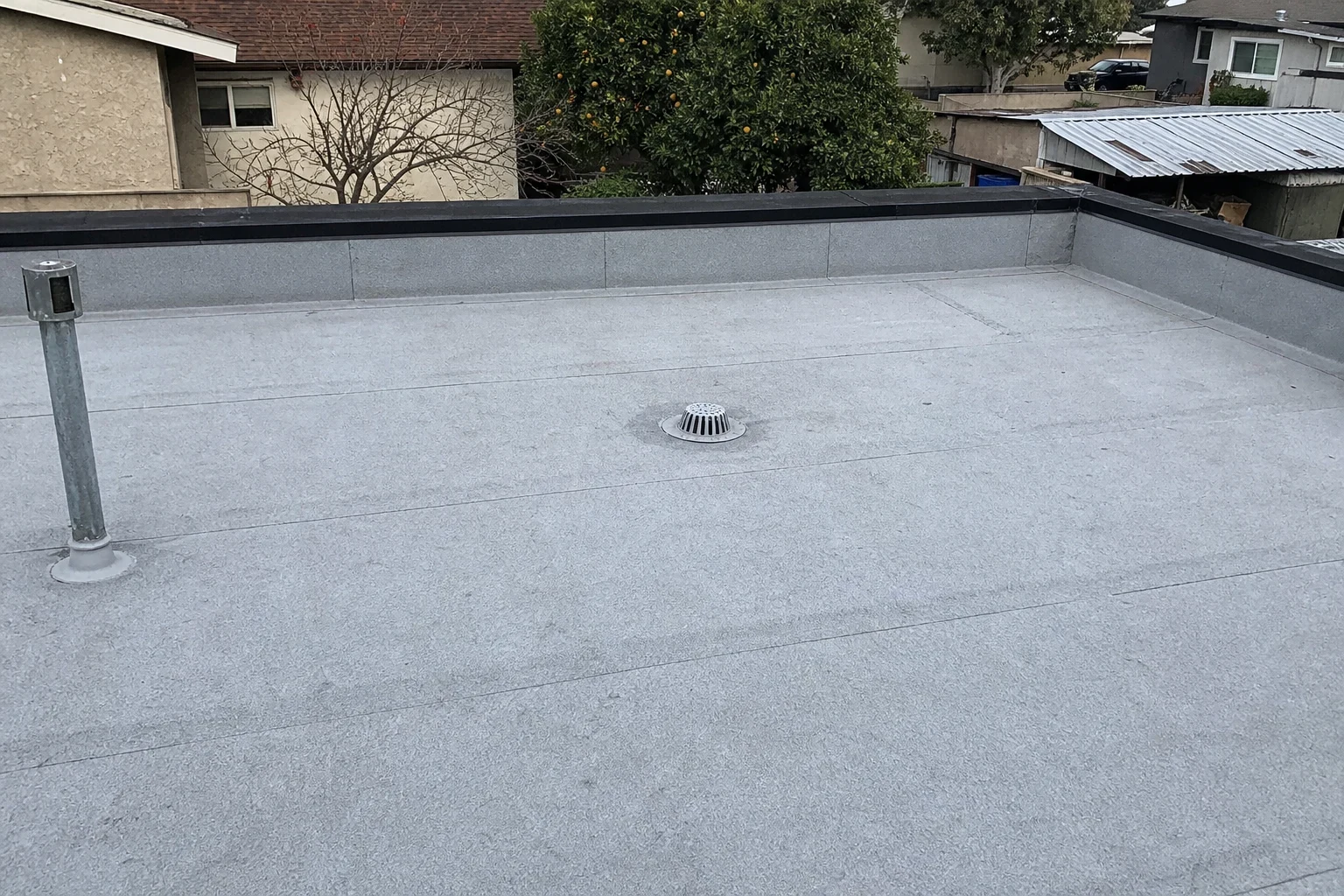
Find Out What Your Flat Roof Needs
We'll look at the drainage, seams and deck, walk you through photos and hand you a written estimate with a start date we can keep.